Electronics enclosures
ABS or PC housings with ribs, bosses, clips, texture, paint and assembly-fit requirements.
 CEMALMold & Engineering
Parts & Applications
Representative applications show the manufacturing questions Cemal reviews for enclosures, clear parts, brackets, housings, clips, buttons and assemblies.
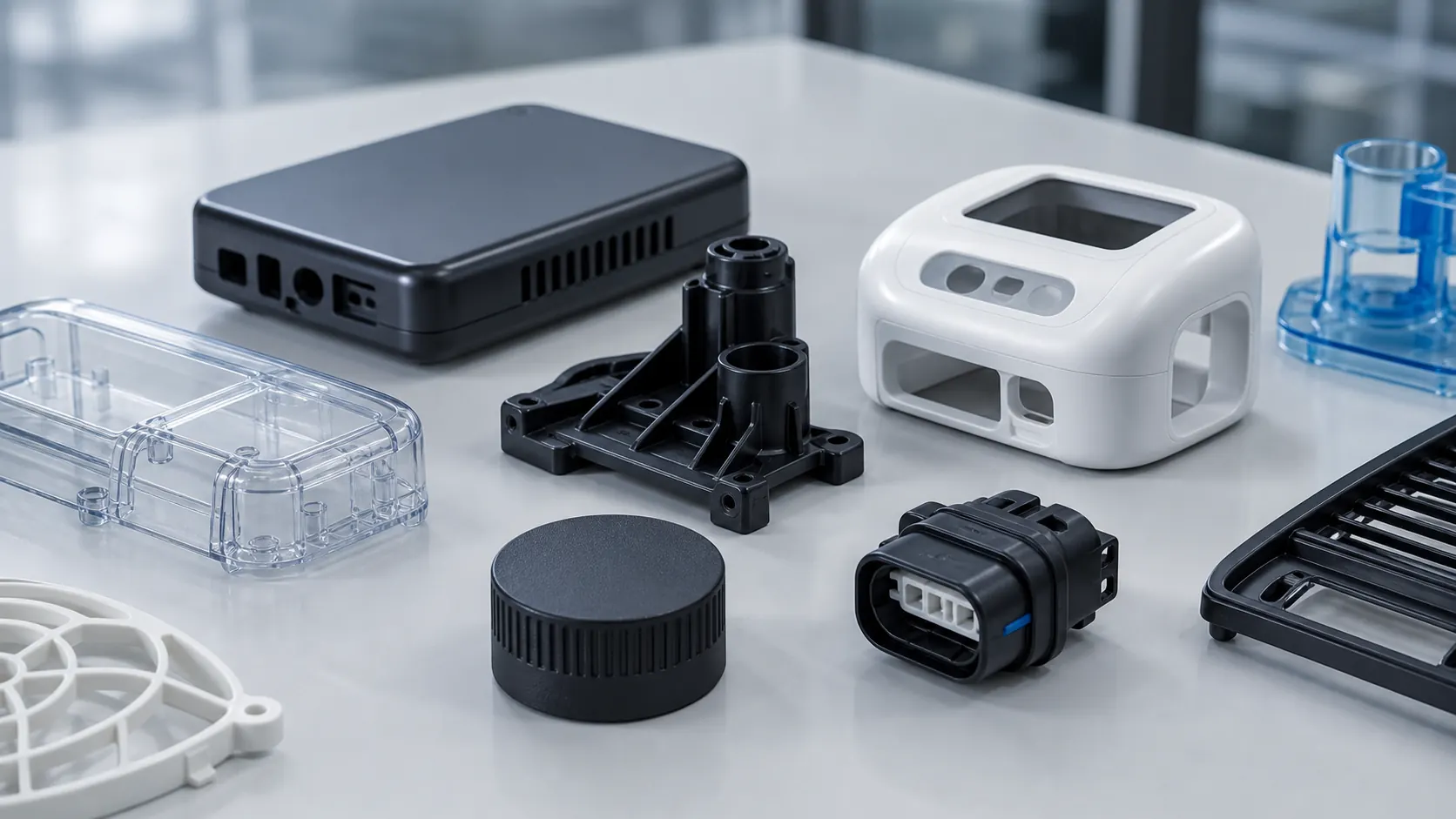
Application illustration
The final manufacturing route depends on your geometry, resin, tolerance, appearance, quantity and approval requirements. The image illustrates part types; it is not a documented customer case study or proof of a specific material, tolerance or production result. Send drawings for a project-specific review.
ABS or PC housings with ribs, bosses, clips, texture, paint and assembly-fit requirements.
PC or PMMA parts where flow, gate location, polishing, protection and visual acceptance require early review.
PA, POM, PP and other engineering plastics selected around load, environment, wear and repeat use.
Cosmetic surfaces, tactile geometry, symbols, color, fit and assembly with neighboring components.
Draft, stress concentration, material behavior and deflection reviewed around the actual function.
Metal inserts, retention, positioning, resin flow and downstream assembly considered as one process.
Project review inputs
Explain what the part does, what it connects to and the consequences of failure.
Identify resin, color, texture, coating and cosmetic zones.
Highlight critical dimensions, undercuts, clear surfaces, inserts, distortion or assembly risks.
Define sample, inspection and approval records that support the buyer's decision.
From application to approval
Material names and similar-looking parts are starting points, not evidence that a new design will meet its requirements. Confirm the grade and acceptance criteria for your application.
Provide mating-component information and identify fastener locations, connector openings and visible faces. State which assembly checks must pass and which dimensions need inspection.
Mark the viewing areas and surfaces where gates, ejector marks or finish variations would be unacceptable. Agree a visual reference and viewing conditions rather than relying on the word “clear” alone.
Describe expected movement, assembly method and loads or repeated-use requirements. Agree which functional checks are needed; a successful dimensional inspection does not replace those checks.
Identify the drawing revision, material and finish to be approved, together with the checks and records required. Record agreed changes before using a sample as a repeat-production reference.
If geometry or material is unresolved, start with DFM feedback. For a defined part, review custom injection molding services and the equipment and inspection questions relevant to acceptance.
If you need a small initial batch, read the low-volume molding versus CNC guide before choosing a route. Explain whether you need assembly prototypes, functional testing or parts representative of the intended production process.
Send drawings, material, quantity and quality priorities.